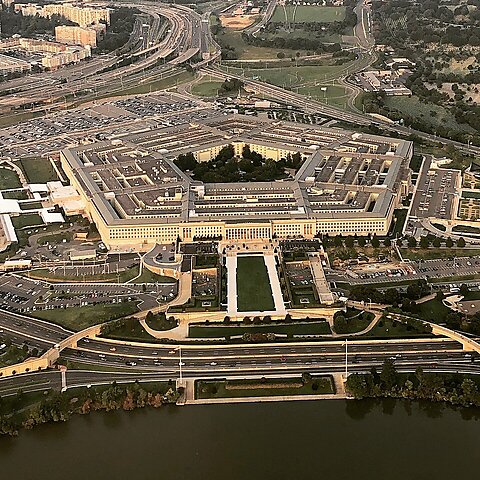

On March 9, Anthropic filed two lawsuits against the government related to its designation as a “supply-chain risk.” One of these is a specific case for reconsideration under the existing statute of the Pentagon’s designation. The other is a broader challenge, arguing that the company’s blacklisting is overbroad and raises associated First Amendment concerns.
Regardless of your stance on the company, you should closely monitor these cases. At the heart of the matter are not just what happens to Anthropic but also serious questions of government power, claims of national security, and the First Amendment rights of individuals and private businesses.
Why This Is a First Amendment Issue
Some may ask what the “free speech” issue is in this case. The problem is we often forget the First Amendment is about more than just “free speech” in the sense of words on a page. By labeling Anthropic a supply-chain risk for refusing to change its product, the government is forcing Anthropic to design its product in a particular way, to carry certain content, or to respond to certain queries.
As my colleagues in our Center for Constitutional Studies explain in discussing the amicus brief they were part of filing in this case, “Anthropic designed the AI system and identified data to ‘train’ the model. Claude works only because Anthropic instills it with a set of editorial directions, which are inherently expressive and receive First Amendment protection. In that way, its algorithmic responses are akin to traditional media curated by human editors.”
The Supreme Court may not have directly considered questions of AI-related design as protected by the First Amendment, but it has considered a range of expressive activities that follow a similar pattern. For example, the Supreme Court has held that First Amendment rights apply to social media platforms engaged in content moderation and to personalized wedding website design decisions. The key design and editorial functions necessary to create and operate an AI model similarly constitute expressive activity.
The potential for the government to dictate the key design functions used for expressive activity or face retaliation for refusing to take the preferred steps goes to the heart of why this case raises significant First Amendment concerns that could extend beyond any single company’s interaction with the government.
The Concerning Government Overreach of the Supply Chain Designation
As a result of labeling Anthropic a supply chain risk, one of America’s leading companies is functionally blacklisted from government contracts and from government contractors. President Trump posted to Truth Social, calling for all government agencies to cease using Anthropic AI products, and is likely to further escalate such action via an executive order.

If the Pentagon had decided to just cancel the contract and go with another vendor, it could potentially have been debated whether the decision was tied to merely standard decisions around procurement or Anthropic’s design decisions and outside speech. However, by labeling the company a supply-chain risk, there appears to be a clear-cut retaliation for the company’s refusal to comply with demands.
This will be relevant to the underlying First Amendment analysis. The government will have to show that the supply-chain risk designation is the least restrictive means to resolve its national security concerns about the company. Of note, these actions label Anthropic a greater risk to national security than the AI company DeepSeek, which has known ties to China, highlighting the severity of this response.
While the national security claims seem largely pretextual for Anthropic’s refusal to change its product to meet Pentagon demands, even if valid, there are significantly less restrictive means than labeling the company a supply-chain risk. As Anthropic points out in its filing, the most obvious of these would have been to simply cancel the contract. In sum, based on publicly known facts, it is hard to imagine that blacklisting a leading American AI company from business dealings not only with the Pentagon but also with the entire government and its suppliers is the least restrictive means.
The potential consequences of allowing such a thing to stand could send ripples not only in the United States but also when it comes to government actions to require American AI models to bend to their whims around the world. As I wrote in my first piece on this matter, we expect American companies to stand up to the demands of foreign governments and uphold the values of a free society. We should applaud it equally when they stand up to our own government for the same reason. Here, we are watching an American company do just that.
Conclusion
The free market seems to have recognized Anthropic’s commitment to its values as a positive and not a risk, as the government seems to try to paint it. Claude has jumped to the top of the app store downloads for AI since it has taken a stand on its principles.
The underlying situation indicates one area where federal AI policy is needed. An AI policy framework should clarify appropriate limitations on government use of AI products and their data to protect the civil rights and liberties of American citizens. Such an approach would create safeguards and certainty for citizens and innovators while still allowing beneficial government deployment for purposes such as constituent services or note-taking in classified meetings. Much of the underlying debate revolves around what constitutes “lawful use” and what guardrails a company has in place to ensure such use. Greater clarity and broader reform on issues like government surveillance and AI are certainly worthy of a healthy policy discussion.
Whether you agree or disagree with Anthropic’s concerns about potential abuse if it were to remove the safeguards, the underlying fact pattern of the Pentagon’s retaliation over its refusal to remove them should concern you. The Pentagon gave a private company a choice: change your product to meet our demands or face being largely blacklisted. Such a choice is an affront to the values enshrined in the First Amendment and those that the US has represented as a free society.